


One-on-One Outpatient Addiction Treatment in Vancouver
Not everyone who needs help for alcohol or drug use is in a position to leave their life for months to get it. Pacific Interventions’ outpatient alcohol drug addiction rehab center in Vancouver is designed for people who need real treatment but can’t, or won’t, put their job, family, or responsibilities on hold to get it.
Flexible Outpatient Drug and Alcohol Rehab That Fits Your Schedule
Outpatient treatment at Pacific Interventions is scheduled around your life, not the other way around. Sessions take place at our Vancouver office, and you work with the same counsellor for the full length of the program. There is no rotating staff and no handoff between sessions, everything is done one-on-one with the same person from start to finish. For clients outside of Vancouver, including other parts of the Lower Mainland and British Columbia, sessions can be arranged through travel or conducted virtually, depending on what works for the individual.
Personalized Outpatient Addiction Treatment
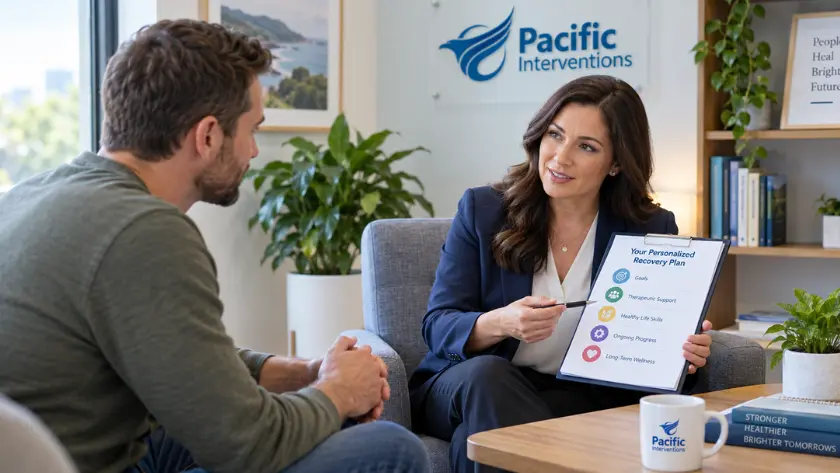
Our intensive outpatient program offers individuals struggling with alcohol or drug addiction the opportunity to address their illness without major disruption to daily life. This program provides a highly confidential environment where individuals can fully engage in the therapeutic process. This individualized approach allows us to identify the underlying factors that trigger substance use. With this awareness, we help clients create a personally tailored treatment plan. All of this important work is done in the privacy of one-on-one counselling sessions. There are no groups or other participants to interfere with the individual’s therapeutic experience. This highly personalized approach gives participants in our outpatient program the best opportunity for success.
In our outpatient program, individuals work through all therapeutic aspects with the same addiction counsellor. This continuity of care allows clients to build strong therapeutic rapport and trust. Therapeutic rapport is a key factor in successful treatment outcomes.

Building Recovery Skills in Your Real-Life Environment
When someone completes inpatient addiction treatment, they return to the same home, relationships, and daily stressors that were present before treatment began, often without having had the chance to practice new coping skills in that environment. Outpatient treatment works differently. Recovery skills are built and tested in real time, in the person’s actual home, workplace, and routine. If a specific trigger shows up, such as a stressful family conversation, a familiar location, or an unstructured weekend, it can be addressed directly with the counsellor as it happens, rather than months later during a transition period. Over time, this builds a version of stability that is rooted in real-life experience, not just theory discussed in a treatment setting.
How Counselling Methods Are Chosen for Outpatient Treatment
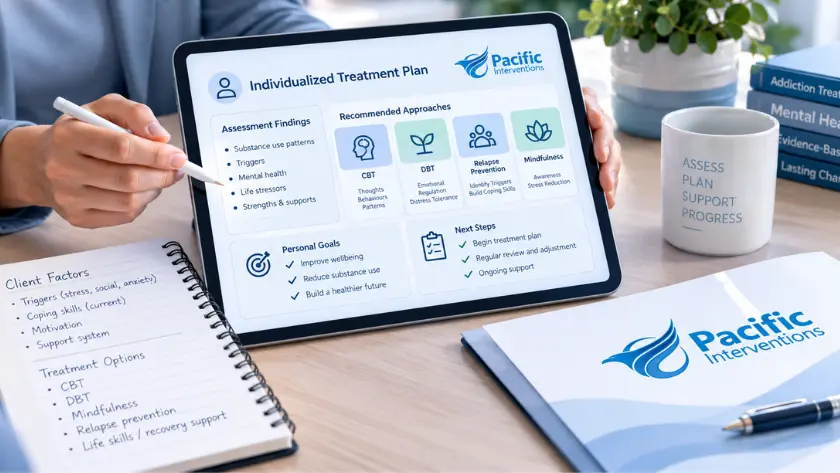
Treatment plans are built around what the assessment actually finds, not a fixed program every client goes through. If someone’s use is closely tied to specific triggers, such as certain people, places, or situations that reliably lead to use, the addiction counsellor may lean more on CBT to work directly on that trigger-to-behavior pattern. If the bigger challenge is managing intense emotions like anger, shame, or fear without reacting to them destructively, the focus may shift toward DBT-based skills for emotional regulation. Addiction counsellors are trained across multiple methods, so the approach can shift based on what’s actually driving the person’s substance use, rather than staying fixed to one method for the full length of treatment.
Managing Withdrawal During Outpatient Treatment
Depending on the substance being used, the amount consumed, and the duration of use, withdrawal may require medical oversight. Withdrawal can be dangerous to manage without appropriate support, particularly with alcohol and certain sedative drugs. Other forms of withdrawal, including opioid withdrawal, can also be severe and may require medical support. Pacific Interventions does not provide medical withdrawal management. When withdrawal presents a medical concern, we ensure that the individual is connected with an appropriate physician, clinic, or supervised withdrawal management service.
Outpatient treatment does not necessarily have to wait until withdrawal is complete. When medically appropriate, an individual can begin participating in the outpatient program while withdrawal is being managed separately by a qualified healthcare professional. This allows counselling, structure, accountability, and early recovery work to begin while the medical aspects of withdrawal are being addressed at the same time.
Addiction medicine may also form part of the broader treatment plan. Medications such as Disulfiram (Antabuse) ( or Naltrexone may be used in the treatment of alcohol use disorder, while medications such as Suboxone or Sublocade may be used in the treatment of opioid use disorder. These medications are not appropriate for everyone and must be prescribed and monitored by an appropriate healthcare professional.
Pacific Interventions also provides regular urinalysis and breathalyzer testing throughout the outpatient program when appropriate. Testing provides objective information about alcohol or drug use and can be especially valuable where trust has been damaged within a family, workplace, or other important relationship. Consistent actions over time are what rebuild trust, and objective testing can provide an additional level of accountability while the individual works toward established recovery goals.
Outpatient Drug and Alcohol Rehab Counselling Approach
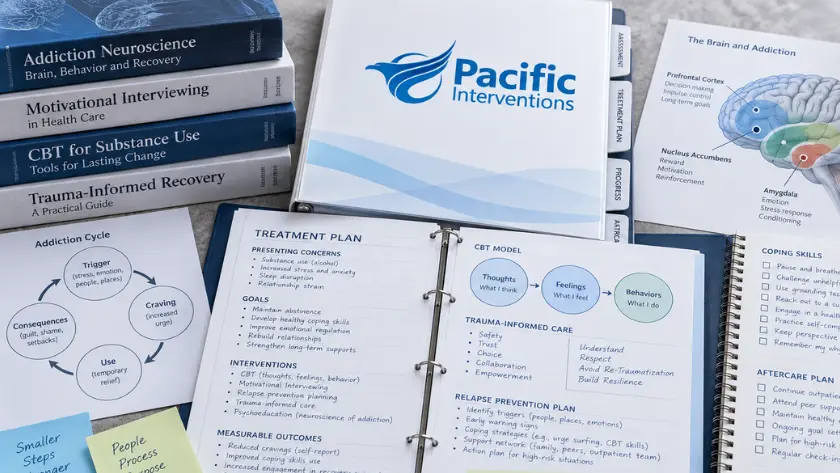
Our addiction counsellors bring extensive experience in developing practical solutions for the physical and psychological challenges individuals face in early recovery. The counsellor’s role is to help individuals identify and change unhelpful thought patterns and behaviours. In our outpatient drug and alcohol rehab program, we use Cognitive Behavioural Therapy (CBT), Mindfulness-Based Cognitive Therapy (MBCT), Dialectical Behaviour Therapy (DBT), Acceptance and Commitment Therapy (ACT), Rational Emotive Behaviour Therapy (REBT), and other evidence-based modalities as integral parts of treatment.
Through these therapies, individuals learn practical strategies for managing triggers, urges, and cravings while developing greater control over their thoughts, emotions, and behaviour. These skills can reduce stress and strengthen confidence as recovery progresses.
The addiction counsellor also supports individuals in developing a more balanced lifestyle. This may include connecting with community-based recovery organizations such as SMART Recovery, 12-Step fellowships, and healthy recreational activities such as exercise, yoga, and sports. Attention is also given to nutrition and other daily routines that can support physical health during recovery from prolonged alcohol or drug use.
Treatment addresses the physical, psychological, and social factors that can influence both substance use and long-term recovery.

Action-Oriented Outpatient Therapy for Real-Life Recovery
Action-oriented therapy goes beyond discussing challenges in the counselling office. The addiction counsellor supports participants as they begin making practical changes in their daily lives. For example, an individual may struggle with body image and avoid exercise entirely because of fear, anxiety, or low confidence.
In an action-oriented approach, discussing the problem is only the first step. The counsellor may accompany the individual into the real-world activities they’ve been avoiding, providing support as they take that step. This allows the individual to move past the avoidance and practice new coping strategies in the real environment, rather than just talking about it in a session. Activities like these also have a physiological benefit, exercise and enjoyable experiences naturally release endorphins and dopamine, offering a healthier way to access the same reward pathways that substance use had been filling.
Over time, this hands-on support can help build confidence and reduce patterns of avoidance or procrastination. Our addiction counsellors focus on helping individuals apply what they learn in counselling to real-life situations and take practical steps toward their recovery goals.
Addressing the Psychological Causes of Addiction
Addiction often develops alongside underlying psychological challenges, such as trauma, chronic stress, abuse, grief, depression, or anxiety, that can drive and reinforce destructive patterns of alcohol or drug use. These aren’t separate from the addiction itself, they’re often part of what’s keeping it in place, and untangling them takes focused, one-on-one clinical attention rather than a generic approach. Our addiction counsellors are trained to recognize how these factors show up differently in each person and to work through them at a pace that fits the individual, rather than treating substance use as an isolated behaviour to correct on its own. This process can help reduce the emotional strain that contributes to substance

Personal Oversight and Outpatient Case Management
Every outpatient participant’s treatment is overseen by Pacific Interventions’ clinical team, led by founder Jeffery Norell and clinical supervisor Vince Pirozzi. Their experience with addiction recovery provides continuity throughout the outpatient program and helps ensure that important changes are addressed as they arise.Ongoing case management keeps treatment coordinated and responsive. Progress, setbacks, changes in substance use, and barriers to recovery can be reviewed directly so that appropriate adjustments are made without losing continuity of care.
Timely access is also important when someone is ready to begin treatment. The outpatient program can start quickly, allowing counselling and structured support to begin while motivation for change is present. This helps maintain engagement and gives the individual a clear point of contact throughout the recovery process.