
Professional Standards for Addiction Recovery in British Columbia
At Pacific Interventions, our clinical team maintains rigorous alignment with IC&RC competencies and TAP 21 standards. These 12 Core Functions of addiction counselling establish the essential framework for providing effective and ethical care. We ensure that all services are delivered in accordance with trauma-informed principles. Our team recognizes that historical trauma and co-occurring mental health conditions fundamentally influence how the individual engages with treatment, regulates emotions, and substance-related relapse risks.
The 12 Core Functions are: Screening, Intake, Orientation, Assessment, Treatment Planning, Counselling, Case Management, Crisis Intervention, Client Education, Referral, Report and Record Keeping, and Professional Consultation.

Summary: Screening determines whether an individual is medically and psychologically stable enough to begin treatment while identifying immediate risks.
Full Detail: We evaluate a person’s physical, psychological, and substance-related status to determine if admission is appropriate. Our primary objective is risk identification and stabilization. Counsellors assess for acute medical concerns, withdrawal risk, and safety issues, including those related to the current mixed-substance supply in British Columbia. We use standardized tools such as the Clinical Institute Withdrawal Assessment for Alcohol-Revised (CIWA-Ar) for alcohol and benzodiazepines, as well as the Clinical Opiate Withdrawal Scale (COWS) or Subjective Opiate Withdrawal Scale (SOWS) for opioids. We also consider trauma-related vulnerabilities, such as sensitivity to medical environments. If the risk exceeds program capacity, we coordinate a referral to emergency services.

Summary: Intake formalizes entry into the program by establishing informed consent and clarifying expectations.
Full Detail: We use the intake process to establish a professional therapeutic framework through informed consent, confidentiality agreements, and program policies. Counsellors ensure each person understands their rights and the limits of confidentiality. This process is the starting point for building rapport and psychological safety. We conclude with a clear overview of the program structure to reduce uncertainty and help the individual feel supported from the outset.

Summary: Orientation provides a clear understanding of program routines and expectations to support early stability.
Full Detail: Orientation provides clarity on the program structure, schedules, and behavioural expectations. We introduce the person to the recovery environment and daily routines—including group participation or one-on-one session protocols. For those receiving care through our Vancouver home-based services, attendance and engagement expectations are clearly defined. This process reduces confusion and supports consistent participation from the start of the journey.

Summary: Assessment develops a comprehensive understanding of an individual’s history and clinical needs.
Full Detail: Our assessment is a multidimensional evaluation of substance use history, mental health status, family dynamics, and social supports. We utilize standardized tools such as the Michigan Alcohol Screening Test (MAST) and Drug Abuse Screening Test (DAST) to assess severity and identify patterns. We integrate trauma exposure and co-occurring disorders into the clinical view to understand the full picture. Our trauma-informed approach prioritizes emotional safety and ensures the process does not cause further distress.
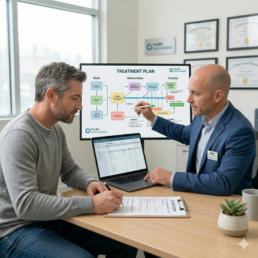
Summary: Treatment planning establishes measurable goals and targeted interventions based on assessment findings.
Full Detail: We develop measurable goals, strategies, and timelines tailored to the individual. Plans address specific barriers, such as emotional dysregulation and relapse triggers, while identifying personal strengths. Core components include individualized goal-setting and coordination with medical services. Where trauma is indicated, we prioritize physical safety and coping capacity before moving into deeper trauma processing.

Summary: Counselling focuses on changing the thoughts and behaviours that contribute to substance use.
Full Detail: We use structured individual and group interventions, including CBT, DBT, and Motivational Interviewing. Work is delivered using trauma-informed principles emphasizing safety and collaboration. In practice, our counsellors:
- Conduct functional analyses of substance use patterns
- Develop coping strategies for urge management
- Challenge maladaptive beliefs
- Strengthen motivation to change
- Build relapse prevention plans
- Support the family system and role-play healthy boundary setting

Summary: Case management coordinates various services to ensure consistent and comprehensive support.
Full Detail: We ensure coordination across services, including healthcare providers and community resources. This may include psychiatric care, housing support, or vocational resources. We begin discharge and aftercare planning early in the process to support continuity of care. By managing these logistics, we allow the individual to focus on their clinical progress while ensuring all aspects of their stability are aligned.
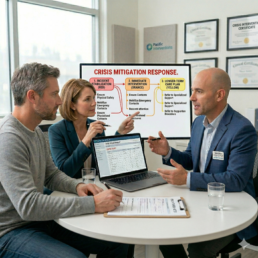
Summary: Crisis intervention provides immediate support to stabilize acute distress and ensure safety.
Full Detail: We respond rapidly to acute psychological or behavioural destabilization. The counsellor applies de-escalation, risk assessment, and safety planning. Our trauma-informed approach recognizes that crises often involve trauma activation rather than just a lack of willpower. We document all incidents and follow them with a treatment plan modification to address the underlying triggers and reduce future risk.
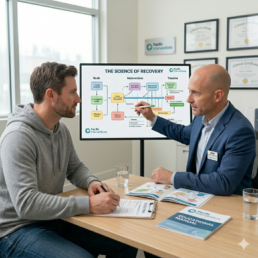
Summary: Education provides evidence-based knowledge about the science of addiction and the recovery process.
Full Detail: We provide information on substance use, the neurobiology of addiction, and recovery strategies. This enhances insight, reduces stigma, and supports informed decision-making. We also introduce external supports such as SMART Recovery or Alcoholics Anonymous to help individuals build a broader recovery network. Education empowers the person with the tools needed for long-term health and wellness.

Summary: Referral ensures individuals connect to the appropriate external services when needed.
Full Detail: We identify needs that fall outside our primary program capacity and facilitate access to specialized services, such as medical care or legal support. Our counsellors ensure continuity by coordinating these transitions and supporting engagement with referred providers. This ensures the individual is placed in the appropriate level of care within the British Columbia healthcare continuum, or where specialized residential resources may better suit their unique clinical needs.

Summary: Record keeping ensures accurate documentation of progress, accountability, and clinical continuity.
Full Detail: Documentation includes assessments, treatment plans, and progress notes. These records support clinical continuity and interdisciplinary communication among the care team. All documentation adheres to strict regulatory, ethical, and confidentiality standards. Accurate tracking allows the counsellor and the individual to see measurable progress toward their goals and make data-driven adjustments to the recovery plan.

Summary: Professional consultation supports clinical decision-making through collaboration and expert supervision.
Full Detail: Consultation involves regular case review and collaboration with internal and external professionals. Counsellors seek guidance when case complexity exceeds their specific expertise. This ensures care remains evidence-based, medically safe, and responsive to the person’s evolving needs. Ongoing consultation strengthens our clinical decision-making and maintains a high standard of practice.
The 12 Core Functions of Addiction Counselling provide a structured,
evidence-based framework for delivering effective addiction treatment
across all stages of care. At Pacific Interventions, these functions
guide clinical practice to ensure services remain consistent, ethical,
and responsive to individual needs.
Through comprehensive assessment, individualized treatment planning, and
coordinated aftercare, addiction counsellors play a critical role in
supporting sustained recovery outcomes. If you are seeking support, our
team can help you determine the most appropriate next step. Call
1-604-537-3503 or schedule a free consultation online.
FAQs
The 12 Core Functions are a standardized set of professional competencies that every certified addiction specialist must master. They outline the essential tasks required to provide effective, ethical, and comprehensive care, from the first phone call to the completion of treatment. These functions ensure that every client at Pacific Interventions receives a high and consistent standard of clinical support.
These functions act as a roadmap for your journey. By following this professional framework, we ensure that no part of your care is overlooked. Whether it’s accurately assessing your needs, creating a personalized treatment plan, or coordinating with other healthcare professionals, these functions provide the structure needed for a safe and successful recovery.
Not exactly. Screening is the very first part, a brief process to determine if our program is the right fit for your immediate needs and if you are medically stable. Assessment is much deeper, it happens once you are in our care and involves a multidimensional look at your history, mental health, family dynamics, and strengths to identify the best way forward.
Orientation is designed to lower anxiety and set clear expectations. We walk you through the program’s goals, daily schedules, rules of conduct, and your rights as a client. Our goal is to make sure you feel safe and informed before diving into the deeper work of recovery.
A treatment plan is not a “one-size-fits-all” document. Based on your assessment, your counsellor works with you to identify specific problems and set measurable goals. We determine which therapeutic methods (like CBT or DBT) will be most effective for you and establish a timeline for your progress.
Recovery often requires more than just counselling. Case management is the process of coordinating all the moving parts of your care. This might include bringing together medical services, housing support, legal resources, or specialized psychological care to ensure you have a comprehensive support system.
Even the most experienced counsellors don’t work in a vacuum. Consultation involves our team meeting with other experts, such as doctors, psychiatrists, or supervisors, to review your progress and ensure we are providing the highest quality of care. This collaborative approach ensures you benefit from a wide range of expertise.
Yes. Report and Record Keeping is a core function that we take very seriously. While we document your progress to ensure continuity of care, all records are maintained under strict provincial and federal privacy regulations to protect your confidentiality