

Fentanyl overdoses is a major public health concern in Vancouver, so understanding symptoms and treatment is vital. As one of the most potent opioids available, even a small amount can cause life-threatening respiratory depression and other serious complications. Because the effects can occur quickly, recognizing the signs of an overdose and responding immediately is essential. Prompt intervention, the administration of naloxone, and access to appropriate fentanyl overdose treatment can help to reduce the risks of death.
This guide explains the common signs of a fentanyl overdose, the immediate steps to take in an emergency, and how naloxone can help reverse the effects of an overdose. It also outlines practical prevention strategies and available resources for ongoing treatment and recovery.
At Pacific Interventions, we understand the urgency of the opioid crisis and the importance of effective, compassionate care. We provide individualized drug addiction treatment programs and intervention services to help people overcome problematic and dangerous substance use.
What is fentanyl, and why is it dangerous?
Fentanyl is a powerful synthetic opioid that is used in medical settings to manage severe pain, particularly after major surgery, serious injury, or in the treatment of advanced cancer-related pain. Due to its potency, fentanyl is typically prescribed only when strong pain relief is required and is carefully monitored by healthcare professionals. Prescription fentanyl is available in several forms, including patches, injections, tablets, and nasal sprays.
Signs of a Fentanyl Overdose
A fentanyl overdose differs significantly from a typical opioid high. While someone under the influence may appear relaxed or drowsy, an overdose often leaves them unresponsive or unconscious.
Key symptoms of a fentanyl overdose include:
- Slow, shallow, erratic, or no breathing at all
- Extreme sleepiness or inability to wake up
- Weak pulse, which may be irregular
- Vomiting
- Choking or gurgling sounds
- Limp or lifeless body
- Pale skin
- Blue lips or fingernails
Overdoses are life-threatening because reduced breathing deprives the brain and organs of oxygen. Even with quick intervention, long-term brain damage can occur without adequate oxygen supply. Recognizing these signs early is crucial to saving lives.
Fentanyl Overdose: Subtle Signs
While the primary symptoms of a fentanyl overdose are often severe and life-threatening, there are subtler signs that can indicate an overdose is beginning. Recognizing these early warning signs can be crucial for timely intervention:
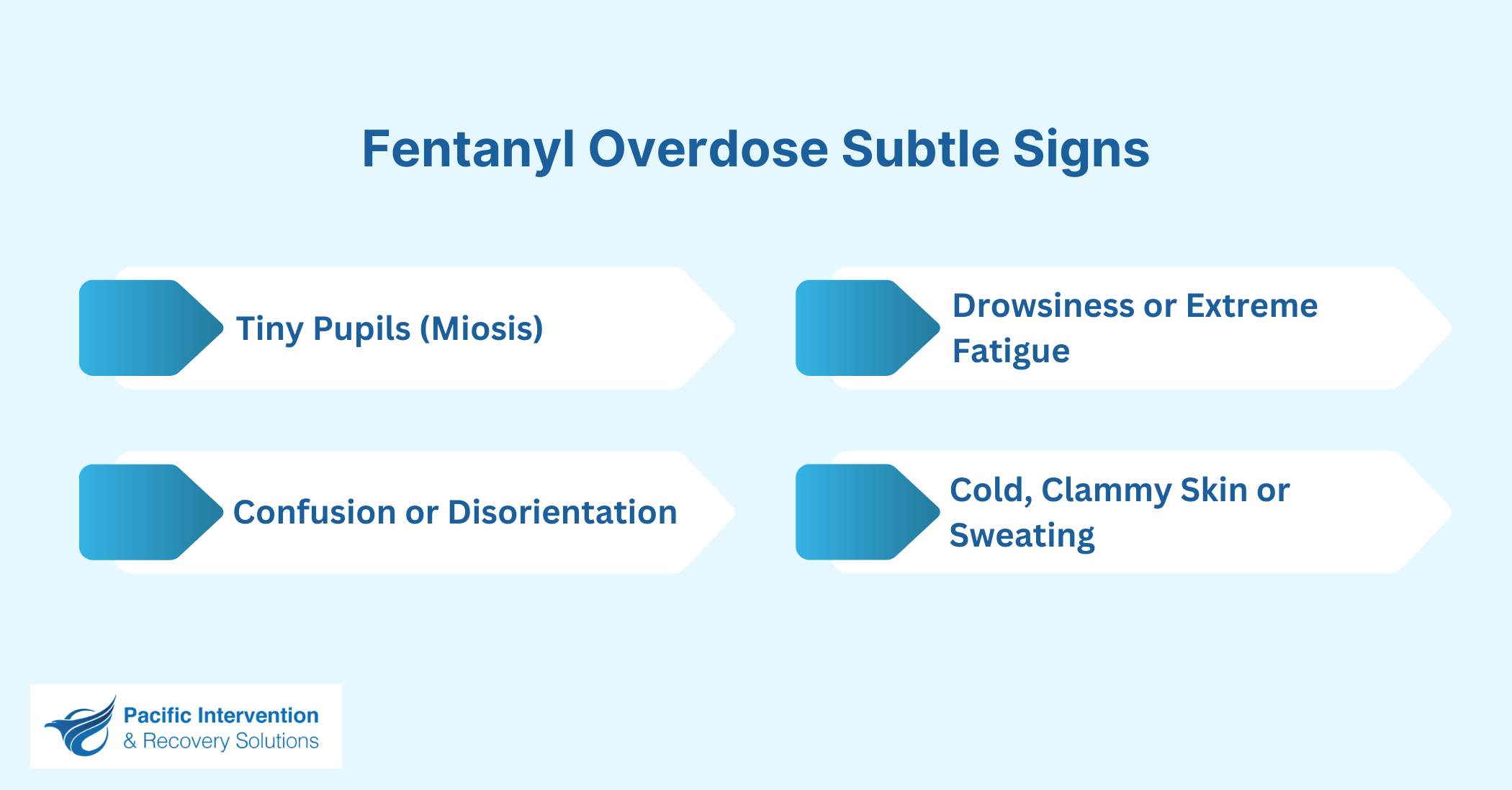
Tiny Pupils (Miosis)
One of the earliest indicators, miosis, causes pupils to become unusually small and is often described as “pinned.” This effect may be difficult to notice in low light, but it is a telltale sign of opioid influence.
Drowsiness or Extreme Fatigue
Excessive drowsiness or difficulty staying awake can signal the sedative effects of fentanyl. Slurred speech or repeatedly drifting in and out of consciousness are red flags of an impending overdose.

Confusion or Disorientation
Fentanyl can impair cognitive function, leading to confusion or difficulty understanding surroundings. Quick mental deterioration may prevent the person from seeking help or responding to danger effectively.
Cold, Clammy Skin or Sweating An overdose disrupts temperature regulation, leading to cold, clammy, or sweaty skin. A pale or ashen complexion often accompanies these symptoms, sometimes with nausea or dizziness.
Emergency Steps: What to Do in Case of a Suspected Fentanyl Overdose
When dealing with a suspected fentanyl overdose, time is critical. Acting swiftly and following these steps can mean the difference between life and death:
Stimulate
Attempt to wake the person. Call their name loudly or apply physical stimulation, such as squeezing their shoulder or pinching the skin between their thumb and fingers. Always explain your actions before touching them. If there’s no response to sound or touch, it’s a medical emergency.
Call 911 Immediately
Use speakerphone if you are alone. Operators will need details such as:
- Your exact location (address, nearby cross streets, business name).
- Your phone number.
- A brief description of the problem.
Don’t hesitate, laws typically protect callers in overdose situations.
Administer Naloxone
Naloxone is a critical lifesaving medication that reverses opioid overdoses by restoring normal breathing. Use it immediately if you suspect a fentanyl overdose:
- Nasal Spray:
- Remove the spray from its packaging.
- Insert the nozzle into one nostril.
- Press the plunger firmly to administer.
- Wait a few minutes for a response. If no improvement, administer another dose if available.
- Injection:
- Clean the injection site with an alcohol wipe (outer thigh or upper arm).
- Insert the needle straight in at a 90-degree angle and push the plunger.
- Wait a few minutes and assess. Administer additional doses every 2-3 minutes, as needed.
Always refer to the naloxone kit instructions specific to the product you’re using.
Provide CPR if needed
. If the person remains unconscious or struggles to breathe, start CPR immediately:
- Position: Lay the person on their back on a firm surface.
- Chest Compressions: Place one hand over the other on the center of their chest. Push hard and fast (100-120 compressions per minute), pressing down about 2 inches (5 cm).
- Rescue Breaths (Optional): If trained, give two rescue breaths after every 30 compressions.
Continue CPR until emergency responders arrive, the person starts breathing, or you’re too exhausted to proceed.
Remember: Acting fast and decisively can save lives.
How to Reduce the Risk of Fentanyl Overdose?
Preventing fentanyl overdoses involves crucial but straightforward steps:
- Follow Prescriptions: Use fentanyl exactly as prescribed. Avoid altering the dose or mixing it with alcohol or other drugs.
- Recognize Overdose Signs: Learn symptoms like extreme drowsiness, slow breathing, and tiny pupils to act quickly.
- Secure Storage: Keep fentanyl out of reach to prevent accidental misuse, especially by children.
- Avoid Mixing Substances: Combining fentanyl with alcohol, benzodiazepines, or stimulants increases the risk of severe reactions.
- Use Test Strips: Test non-prescribed drugs for fentanyl using affordable strips to detect contamination.
- Never Use Alone: Having others nearby can save lives in case of an overdose.
- Carry Naloxone: Keep naloxone accessible to reverse overdoses in emergencies.
The safest choice is to avoid fentanyl entirely and make informed decisions to reduce risks.
The Importance of Carrying Naloxone Kits
Carrying a naloxone kit remains one of the most effective ways to reduce the risk of death from an opioid overdose. Naloxone temporarily blocks the effects of opioids on the brain, particularly their impact on breathing, which is the primary cause of death in overdoses. Naloxone kits are essential not only for opioid users but also for their friends, family, and community members. Since fentanyl is often unknowingly mixed with other drugs, the risk of accidental overdose extends beyond habitual users.
Having naloxone readily available and using it promptly during an overdose can reduce the risk of death while waiting for emergency medical assistance.
Post-Overdose Recovery and Support
Recovering from a fentanyl overdose requires professional help to achieve lasting recovery. Pacific Interventions offers personalized inpatient and outpatient programs, recovery coaching, and support tailored to individual needs.
Post-treatment care is essential for maintaining sobriety. Relapse prevention strategies, family counselling, and support groups play a vital role in fostering long-term recovery. A strong support network and continued care are crucial to avoid relapse and rebuild a healthy, stable life.
Conclusion
Fentanyl overdoses are life-threatening, but timely recognition of symptoms and swift action can save lives. Call 911 immediately, administer naloxone, and perform CPR if necessary. To minimize overdose risks, use fentanyl test strips, avoid combining substances, and keep naloxone kits readily available.
Recovery is possible with professional help. Contact Pacific Interventions to access support to help you overcome addiction.