

A Relapse Can Feel Like Everything Is Lost
People in recovery often struggle with what to do after a relapse because feelings of shame, guilt, anger, and fear can quickly take over. A dangerous intrusive thought may also follow, “I have already ruined everything, so there is no point in stopping now.” That thought can turn one episode of use into several days or weeks of use.
A relapse is serious, but it does not erase the time a person spent sober or the changes they made during treatment. It means something in the recovery plan did not hold up. The immediate priorities are to check for a medical or psychiatric emergency, prevent further use, and determine what needs to change.
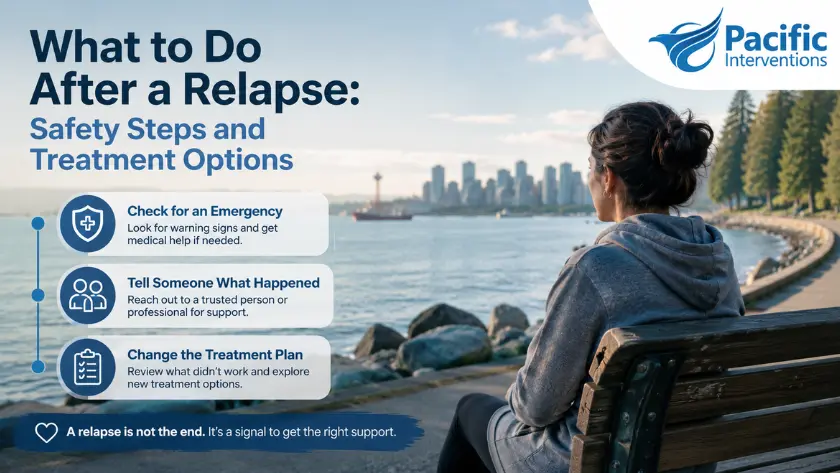
Check for an Emergency
The warning signs depend partly on what was used. Call 911 if the person:
- Cannot be awakened
- Is breathing slowly, irregularly, or not at all
- Has blue, grey, or unusually pale lips or skin
- Is making choking, gurgling, or unusual snoring sounds and cannot be awakened
- Is having a seizure
- Has chest pain
- Is severely confused or hallucinating
- Is extremely agitated, paranoid, or behaving unpredictably
- Is dangerously overheated
- May have taken an unknown substance or combination of substances
- Is threatening suicide or has attempted to harm themselves
Do not assume that someone who is unconscious can “sleep it off.”
Opioids
When opioid exposure is possible, give naloxone if it is available and call 911. Stay with the person. Naloxone can reverse the effects of an opioid overdose, but more than one dose may be needed. Its effects can also wear off while opioids remain in the body.
An opioid relapse can be especially dangerous after a period without use. The person may no longer tolerate the amount they previously used. Returning to the old dose can cause an overdose.
Naloxone only reverses opioid effects. It does not reverse alcohol, benzodiazepine, stimulant, or other non-opioid intoxication. Call 911 even if the person responds to naloxone.
Alcohol and Benzodiazepines
A person who has returned to heavy or frequent alcohol or benzodiazepine use may develop dangerous withdrawal symptoms if they suddenly stop. The risk is higher when there is a history of withdrawal seizures, hallucinations, delirium, or previous medically supervised withdrawal. A doctor or withdrawal-management service should assess whether stopping at home is safe.
Severe intoxication also requires emergency help when the person cannot stay awake, is vomiting while barely conscious, has slowed breathing, has a seizure, or cannot be kept safe.
Alcohol can increase overdose risk when it is combined with opioids, benzodiazepines, or other sedating drugs. These combinations can suppress breathing even when each substance was taken in an amount the person has previously tolerated.
Stimulants
A relapse involving cocaine, methamphetamine, or another stimulant can become a medical emergency even when the person remains awake.
Call 911 for chest pain, severe headache, seizure, collapse, dangerous overheating, severe agitation, extreme paranoia, hallucinations, or signs of a stroke. The person may not recognize how medically unstable they have become.
Keep the environment calm while help is coming. Maintain a safe distance, move other people away, and remove obvious hazards only if this can be done safely. Do not argue with or attempt to physically restrain someone who is frightened, paranoid, or highly agitated. Leave physical intervention to trained emergency responders.
Unknown or Mixed Substances
Do not assume that a pill, powder, or street drug contains only the substance the person expected. When the contents are unknown, respond to the symptoms in front of you.
Mixed-substance use can produce conflicting or delayed effects. For example, a stimulant may keep someone awake while an opioid suppresses their breathing. Alcohol, opioids, and benzodiazepines can also combine to increase sedation and overdose risk.
Tell Someone What Happened
People often hide a relapse because they expect anger, disappointment, or judgment. They may avoid their counsellor, doctor, sponsor, family, or treatment program until they have managed to stop again.
That usually makes the situation even more difficult to manage.
If there is no immediate emergency, contact someone who can help the person respond to the relapse. This may be a doctor, counsellor, sponsor, family member, treatment program, or withdrawal-management service.
Tell them:
- What was used
- How much was used
- When it was used
- How the substance was taken
- Whether alcohol, medications, or other drugs were also involved
- Whether the substance came from an unknown or unreliable source
- Whether any substance remains available
- Whether the person is experiencing withdrawal symptoms
- Whether there is chest pain, severe agitation, paranoia, hallucinations, or prolonged wakefulness
- Whether there are thoughts of suicide or self-harm
- Whether another episode of use is likely
Accurate information matters. A doctor can assess intoxication, overdose risk, withdrawal, medication interactions, and psychiatric symptoms.
Make It Harder to Keep Using
The next few hours matter.
Leave the place where alcohol or drugs are available. Do not drive while impaired. Avoid the people involved in the relapse. Stay with a trusted sober person when possible.
Remove any remaining substances, but only when this can be done safely. Do not confront someone who is intoxicated, aggressive, paranoid, or carrying a weapon.
When the person agrees and it is safe to do so, limit access to cash, drug dealer contacts, alcohol or drug delivery services, and medications involved in the relapse. Keep transportation available for medical care, treatment, or a safe place to stay.
If the person refuses help or the relapse continues to escalate, the family may need to consider a planned alcohol or drug intervention. An interventionist can help the family recognize signs of immediate medical or psychiatric danger, determine whether emergency assessment is needed, and prepare a clear plan for helping the person return to treatment. If there is uncertainty about which substances were used, or the person is not providing a clear account, urine drug testing may help identify recent substance use, while follow-up testing may help determine whether use is continuing.
The safest next step depends on the substance used and the person’s condition. Someone at risk of alcohol or benzodiazepine withdrawal may need medical assessment before stopping. Someone experiencing stimulant-related paranoia may need urgent psychiatric or emergency care. Someone returning to opioid use may need naloxone nearby and prompt access to medication treatment.
Do not focus on whether the person has “lost” their sober time. Focus on preventing the next episode of substance use.
Clinical Insight: Why Cravings Can Intensify After a Relapse
After a relapse, cravings may become stronger over the following hours or days. Using again can reactivate the learned connection between the substance, relief, reward, and familiar triggers. People, places, routines, and emotions associated with past use may begin producing stronger urges. Poor sleep, withdrawal symptoms, anxiety, low mood, physical discomfort, and renewed access to the substance can increase the risk of continued use.
This can be a profoundly unstable period, and the person’s usual coping strategies may not provide enough protection. A temporary return to treatment or a more structured level of care may be necessary if cravings are difficult to control or another episode of use is likely. The priority is to protect the person during the period when cravings are more intense.
Find Out What Led to the Relapse
A useful review does not begin with, “Why did you throw everything away?”
It begins with, “What was happening before you used?”
Look at the hours, days, and sometimes weeks before the relapse:
- Had the person stopped attending treatment or recovery meetings?
- Had they stopped or changed a prescribed medication?
- Were cravings becoming stronger or more frequent?
- Were they sleeping poorly?
- Had their depression, anxiety, anger, paranoia, or pain worsened?
- Were they isolating themselves?
- Were they under a lot stress at work or school?
- Had they started spending time with people who use?
- Were they keeping alcohol or drugs nearby?
- Had they begun telling themselves that one drink or one dose would be manageable?
- Was there a conflict, loss, celebration, payday, anniversary, or other high-risk event?
- Had they been awake for a prolonged period?
- Did they consider asking for help and then decide not to?
The goal is to identify the point at which risk began increasing.
The warning signs may differ by substance. A person returning to alcohol may begin hiding bottles or drinking earlier in the day. Someone returning to stimulants may stop sleeping, become increasingly suspicious, or disappear for long periods. Someone at risk of opioid relapse may reconnect with a dealer, stop taking medication, or begin seeking pills.
Substance use was the final step, not necessarily the first warning sign.
Change the Treatment Plan
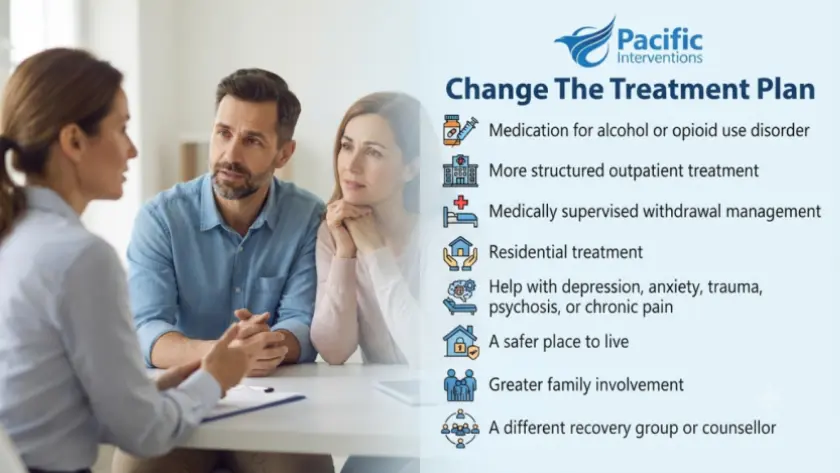
A relapse is a reason to review the treatment plan rather than simply restart it. The review should identify what changed before the relapse and what was missing when the person needed help.
The person may need:
- More frequent counselling
- A medical or psychiatric assessment
- Medication for alcohol or opioid use disorder
- Structured outpatient addiction rehab program
- Medically supervised withdrawal management
- Residential inpatient treatment facility
- Help with depression, anxiety, trauma, psychosis, or chronic pain
- A safer place to live
- Greater family involvement
- A different recovery group or counsellor
- More support during evenings, weekends, paydays, or other high-risk periods
The substance used, withdrawal risk, physical and mental health, living situation, and likelihood of continued use all affect what should happen next. A review of the relapse by an addiction professional can help determine whether the current treatment plan still provides enough support.
In Canada, common medications used to treat opioid use disorder include Suboxone, Sublocade, and methadone. Suboxone contains buprenorphine and naloxone and is taken under the tongue. Sublocade contains extended-release buprenorphine and is given as a monthly injection under the skin by a healthcare provider. Methadone is taken by mouth. These medications can reduce opioid cravings and withdrawal symptoms and lower the likelihood of returning to unregulated opioid use. When properly prescribed and continued, treatment with Suboxone, Sublocade, or methadone is also associated with a lower risk of fatal opioid overdose than untreated opioid use disorder.
For someone returning to abstinence after an alcohol relapse, acamprosate or disulfiram may be considered. Acamprosate can help maintain abstinence after drinking has stopped. Disulfiram, also known as Antabuse, causes an adverse reaction if alcohol is consumed. It does not reduce cravings and should only be used when the person understands the risks, is committed to abstinence, and has been medically assessed.
There is no medication approved by Health Canada specifically for stimulant use disorder. Treatment may include contingency management, cognitive behavioural therapy, and frequent appointments with an addiction counsellor. Prolonged wakefulness, paranoia, hallucinations, severe depression, or suicidal thoughts require urgent medical or psychiatric evaluation.
Write a Plan That Can Be Used During a Craving
A relapse-prevention plan should not say, “Stay positive,” “Remember your goals,” or “Ask for help.”
It should say exactly what the person will do.
For example:
When I begin planning to use, I will call my counsellor and my brother. I will leave any place where alcohol or drugs are available. I will not carry cash or contact people I used with. If I cannot stop planning to use, I will go to a residential treatment center or outpatient rehab program.
A practical plan identifies:
- The person’s earliest warning signs
- The situations in which they are most likely to use
- The names and phone numbers of people to contact
- Where they can go when their current environment is unsafe
- How they will limit access to alcohol, drugs, and money
- What to do when they miss medication or treatment
- Where naloxone is kept when opioid exposure is possible
- Who knows how to use naloxone
- Which withdrawal symptoms require medical assessment
- Which psychiatric or behavioural changes require urgent help
- The point at which outpatient support is no longer enough
- What family members should do during an emergency
The plan should also address problems that repeatedly weaken the person’s recovery, including poor sleep, loneliness, untreated pain, family conflict, unemployment, unstable housing, and long periods without structure.
A Relapse Does Not Erase Your Progress
It also does not erase what was accomplished before the relapse. The person may have attended treatment, spent months or years sober, repaired relationships, rebuilt trust, returned to work, created more stability in their life, and developed healthy routines that supported recovery. They may also have learned which people, services, and treatment approaches helped them stay well. That progress still matters because it shows what was working before the relapse and what may need to be restored, strengthened, or changed.
A relapse is not something to explain away. It is something to respond to, learn from, and use to strengthen the next stage of recovery.
Get Support Before It Escalates
If you are struggling to stop after a relapse or are unsure what level of support is needed, contact Pacific Interventions for a free consultation to discuss treatment options.
Clinical Review
Clinically reviewed by Jeffrey Norell, Addiction Specialist, for clinical accuracy and evidence-based principles.
Frequently Asked Questions
Does every relapse mean residential treatment is necessary?
No. Residential treatment may be appropriate when the person cannot stop using, has repeated overdoses, faces dangerous withdrawal, has severe psychiatric symptoms, or lives in an environment where continued use is likely. Other people may need medical withdrawal management, urgent psychiatric care, medication treatment, or stronger outpatient support instead. The decision should be based on current risk and stability, not shame, family pressure, or lost sober time.
What should a family do if the person refuses help after a relapse?
Focus first on immediate safety, then set clear limits around what the family will and will not support. Do not provide money or transportation that will be used to obtain alcohol or drugs, but do not block access to treatment, medical care, or safe housing. Avoid arguing while the person is intoxicated, paranoid, or highly agitated. A family counsellor or intervention specialist can help the family decide what boundaries to set, how to respond during a crisis, and what to do if the person continues to refuse treatment.
Can someone return to the same treatment program after a relapse?
Sometimes, but the program should review what contributed to the relapse before treatment restarts. The person may need a different counsellor, more frequent contact, medication, psychiatric care, withdrawal management, or a higher level of structure. Returning makes sense only if the program can address the substance involved and the new risks. Repeating the same schedule without changing the plan may leave the same problems in place.
Should a person restart their sober date after a relapse?
That depends on the recovery approach being used, but the date should not become the main clinical issue. Some people find restarting the date honest and motivating. Others become so ashamed that they stop attending treatment or continue using. The more important questions are what happened, whether the person is safe, and what needs to change. Sober time can be tracked without treating one episode as proof that all progress was lost.