

What Is an Intensive Outpatient Program?
An intensive outpatient program (IOP) is a structured form of alcohol and drug addiction treatment. It is designed for people who need more support than occasional one-hour counselling sessions but do not require 24-hour residential care.
IOP allows individuals to participate in regular rehab sessions while continuing to live at home. They can also maintain work, family, school, and other day-to-day responsibilities.
IOP can be used as a primary form of outpatient treatment or as part of a step-down plan after a higher level of residential care. At Pacific Interventions, the IOP is structured around private, one-on-one addiction counselling rather than a group therapy approach.
How IOP Works at Pacific Interventions
Treatment begins with intake assessment. This covers relevant personal history, substance use patterns, current concerns, and other factors that may affect recovery. Information gathered during this process is used to develop a personal treatment plan. The treatment plan is based on the individual rather than standardized for every participant. The treatment plan identifies specific treatment goals and therapeutic approaches that may be appropriate for that individual.
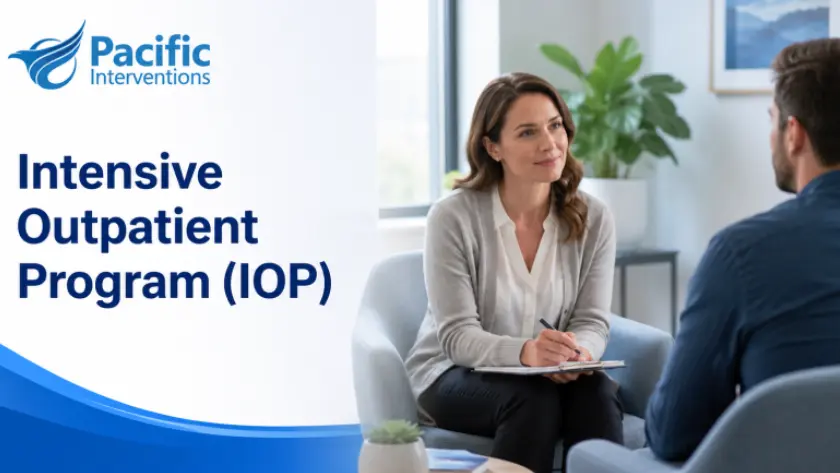
One-on-one counselling remains central throughout the program. Participants work consistently with the same addiction counsellor. This provides continuity and allows sessions to build on previous work instead of repeatedly starting over with a new addiction specialist.
Treatment may address topics such as:
- substance use patterns, triggers, and high-risk situations
- coping skills and emotional regulation
- motivation for change
- relationships and communication
- routines, responsibilities, and lifestyle patterns
- relapse prevention and recovery planning
- underlying experiences or challenges associated with substance use
Pacific Interventions also incorporates action-oriented therapeutic work when appropriate. Addiction counselling does not necessarily have to take place entirely in an office setting. Depending on the individual’s treatment goals, sessions may involve activities such as walking, hiking, or going to the gym. They may also include other healthy activities intended to support routine, balance, and constructive lifestyle change.
A treatment plan may also include attending community-based recovery meetings. These may include Alcoholics Anonymous (AA), Narcotics Anonymous (NA), or SMART Recovery when these resources fit the individual’s preferences.
Therapeutic Approaches Used at Pacific Interventions
Effective addiction counselling may draw from several therapeutic approaches rather than relying on a single counselling technique.
At Pacific Interventions, counselling methods may include:
Cognitive Behavioral Therapy (CBT)
CBT examines connections between thoughts and behaviours. In addiction counselling it is used to identify thought and behaviour patterns associated with substance use. It may also help participants develop more constructive responses to triggers or stressful situations.
Dialectical Behavior Therapy (DBT)
A DBT-based addiction counselling approach can help individuals work on emotional regulation to avoid destructive behavioural responses, allow them to replace impulsive reactions with healthier coping strategies.
Motivational Interviewing
This collaborative addiction counselling approach helps people explore their own reasons for change. It can also help when someone feels uncertain or conflicted about reducing or stopping substance use.
Talk Therapy
Individual therapeutic conversations can provide space to examine personal experiences, relationships, behaviours, and concerns related to addiction and recovery.
Mindfulness-Based Therapy
Mindfulness practices may help participants become more aware of thoughts, emotions, cravings, and reactions. The goal is to pay close attention to these experiences without automatically responding to them.
Trauma Informed Care
Addiction counselling at Pacific Interventions is delivered from a trauma-informed perspective. Trauma-informed care recognizes that past or ongoing traumatic experiences can affect emotional health, behaviour, relationships, and substance use. It emphasizes psychological and physical safety, trust, collaboration, and individual choice. It also aims to avoid practices that may unnecessarily recreate feelings of powerlessness or distress. Trauma-informed addiction care does not assume that every person has experienced trauma. It also does not assume that trauma is the sole cause of addiction. Instead, treatment takes possible trauma histories into account when care is developed and delivered.
Substance Use Monitoring and Accountability
Substance use monitoring may also be incorporated into an IOP. Pacific Interventions can use random urinalysis and breathalyzer testing to provide additional accountability. Testing also gives the counsellor objective information about possible substance use during treatment. Testing is not mandatory. It may be recommended when increased transparency would support treatment goals. When applicable and appropriately authorized, results may also be shared with family members or employers.
Who May Be a Good Fit for IOP?
An intensive outpatient program may be suitable for someone who can safely remain in the community. They must also be able to participate reliably in structured addiction treatment sessions.
Potential candidates may include people who:
- have ongoing work, family, or home responsibilities
- want frequent, structured addiction counselling
- have a stable and supportive living environment
- do not require continuous medical withdrawal monitoring
- can participate reliably in scheduled treatment
- are transitioning from residential or other higher-intensity treatment
Suitability should be determined through an intake screening phone call or at an in-person introduction session.
Benefits of an Intensive Outpatient Program
One of the main benefits of IOP is that participants work toward stability while continuing to live in their own environment. This allows them to address challenges involving home, work, relationships, routines, and substance use as those situations arise.
Participants can practise coping strategies and make lifestyle changes in the same environment where they will need to maintain them after treatment. This can make the transition out of treatment less abrupt than leaving an inpatient or residential program.
In residential treatment, a person may become stable in a controlled environment and then need to adjust to maintaining recovery at home after discharge. With IOP, that adjustment happens during treatment.
Private individual treatment may also benefit people who are uncomfortable discussing personal matters in a group setting or who need more individualized attention. Being able to speak privately and focus counselling on their own circumstances can make it easier for some people to engage fully in treatment.
Limitations of IOP
IOP provides less supervision than residential or inpatient treatment because participants continue living in their own environment between sessions. This means they need to participate consistently in treatment and manage day-to-day challenges outside counselling sessions. A higher level of care may be more appropriate when there is a significant risk of dangerous withdrawal or serious medical complications. It may also be needed in cases of acute psychiatric instability, immediate safety concerns, or an unsafe or highly unstable living environment. A higher level of care may also be appropriate when a person cannot remain substance-free long enough to participate safely in treatment.
Pacific Interventions does not provide medical detoxification. When alcohol and drug detox is needed, Pacific Interventions can make a referral to an appropriate addiction treatment provider.
IOP vs. Inpatient or Residential Treatment
The main difference between an intensive outpatient program and residential or inpatient treatment is the degree of supervision and the living arrangement. In an IOP, the person remains in their own community and attends scheduled treatment sessions. There is no 24-hour onsite supervision.
Residential treatment generally requires a person to live at a treatment facility for a period of time. They also participate in a structured treatment schedule. Inpatient treatment may provide a higher degree of medical or psychiatric monitoring when clinically necessary. The level of monitoring depends on the facility and individual level of care required.
The appropriate rehab setting depends on the participant’s level of substance use dependence and personal circumstances.
Planning for Recovery After IOP
Near the end of the Pacific Interventions IOP, an aftercare plan is developed. The plan helps participants prepare for continued recovery following addiction treatment. Depending on individual requirements, the plan may include ongoing addiction counselling, recovery coaching, community recovery meetings, vocational training, continuing education, family counselling or other support systems that reinforce recovery.
Clinical Review
This content was clinically reviewed by Jeffrey Norell, Addiction Specialist
Frequently Asked Questions About Intensive Outpatient Programs
Can an IOP be appropriate for someone with both substance use and mental health concerns?
Yes, it can be. Anxiety and depression are commonly associated with ongoing substance use and the consequences that come with it. Other co-occurring mental health conditions may require psychiatric support that an IOP cannot provide. When that happens, the addiction counsellor can help coordinate a referral while continuing to support the person’s recovery where appropriate.
Can the level of care change after I start an IOP?
Yes. A person’s treatment plan may change during IOP if their substance use patterns, mental health, safety, or ability to participate in outpatient treatment changes. The addiction counsellor monitors these factors throughout treatment. If something arises that falls outside the scope of the IOP, the addiction counsellor can refer the participant to a higher level of addiction treatment, such as inpatient care. Once the participant has stabilized, returning to IOP may again be an appropriate course of rehab.
Can I start an IOP while I am still going through withdrawal?
In some cases, yes. At Pacific Interventions, a person may be able to begin the IOP while withdrawal is still being medically managed, rather than waiting until withdrawal is completely over. Starting treatment during this period can provide individual counselling and emotional support at a difficult point in early recovery. Whether this is appropriate depends on the severity of withdrawal and whether the person can safely participate in outpatient treatment.
How is progress reviewed during an IOP?
Progress is monitored continuously throughout the treatment program, with more formal reviews taking place at key points.
At the midpoint of the IOP, the participant’s progress toward achieving their goals, substance use reduction or abstinence, therapeutic engagement, stability, and ability to apply recovery strategies are reviewed. This helps determine how well the current treatment approach is working and whether any adjustments would be beneficial.
Before the end of the IOP, an aftercare review is completed to help plan how the participant will manage recovery and daily life after the program ends.
These reviews help ensure progress is being tracked and that the participant is benefiting from the treatment approaches being applied.